Dog-Friendly Villas in Bali: What to Check Before Booking
Use this checklist to separate a genuinely dog-friendly Bali villa from a vague pet-friendly listing, then confirm the property, logistics and terms before paying.
A search for a dog-friendly villa in Bali often produces hundreds of listings, but the label can mean very different things. One property may explicitly accept dogs and have a process for confirming the stay. Another may simply leave “pets allowed” switched on in a directory, while its current house rules, compound layout or management team say something else.
The safest booking decision starts by treating dog-friendly as a claim to verify, not a complete policy. Confirm that your specific dog is accepted for your specific dates, understand which spaces are included, and get the applicable conditions in writing before paying. That protects both the guest and the property team from assumptions made through a search filter.
At Pronoia, both operating Phase 1 villas accept guests travelling with a dog when this is declared in the booking request. The live rental page includes a dedicated checkbox so the team receives that information with the villa, dates and guest count. Selecting it applies the published dog-stay surcharge and minimum stay shown in the online quote; the team confirms any remaining arrangements in writing.
Start with a policy, not a search badge
“Pet-friendly” is usually too broad to answer the questions that matter. It may cover dogs only, require advance notice, apply to selected units, or exclude shared facilities. A useful policy should tell you who makes the decision and how the decision becomes part of the booking.
Before comparing interiors or prices, ask the property to confirm five points:
- Is a dog accepted in the exact villa you are booking?
- Must the dog be declared before confirmation?
- Are any size, number or behaviour conditions applicable?
- Which private and shared areas can the dog use?
- Are cleaning, deposit or damage terms different for this stay?
Do not infer an answer when a listing is silent. A missing fee does not prove there is no fee; a photograph of a garden does not prove it is enclosed; and a “pets allowed” icon does not prove that every animal or every unit is covered. Ask one concise set of questions and save the reply with your reservation.
A good operator should be comfortable distinguishing confirmed facts from items that depend on the dog or dates. If the answer remains vague, treat the uncertainty as part of the booking risk rather than assuming the most convenient interpretation.
Match the villa layout to your dog
A luxury villa can look ideal to a person while presenting unfamiliar transitions for a dog. Open living areas, polished floors, steps, sliding doors, planted edges and a private pool all change how the space works. The relevant question is not whether the architecture is attractive, but whether you can manage your dog safely without disrupting the property.
Request a current floor plan or recent photographs and trace an ordinary day. Where will the dog rest while doors are open? How do you move from the bedroom to an outdoor area? Is there a direct route near the pool? Can staff enter the villa, and how will you prevent an unexpected exit when they do? If your dog is older, small, anxious or unfamiliar with pools, those details matter more than a generic amenity list.
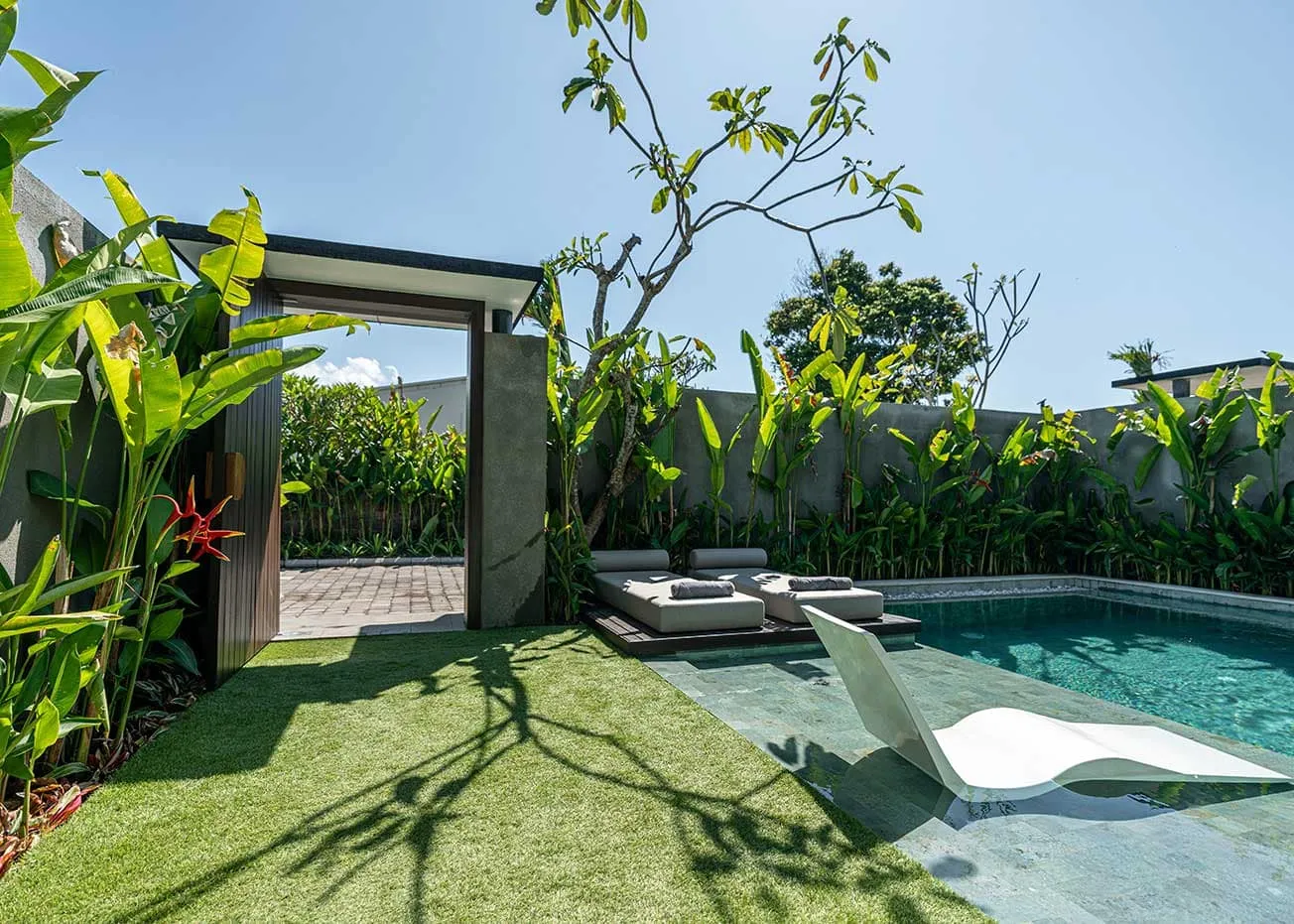
An “enclosed garden” should never be assumed from landscaping photography. Ask whether the boundary is continuous, how high it is, whether gates latch, and whether there are openings around service areas. If the property does not confirm containment, plan to use your normal lead and supervision routine.
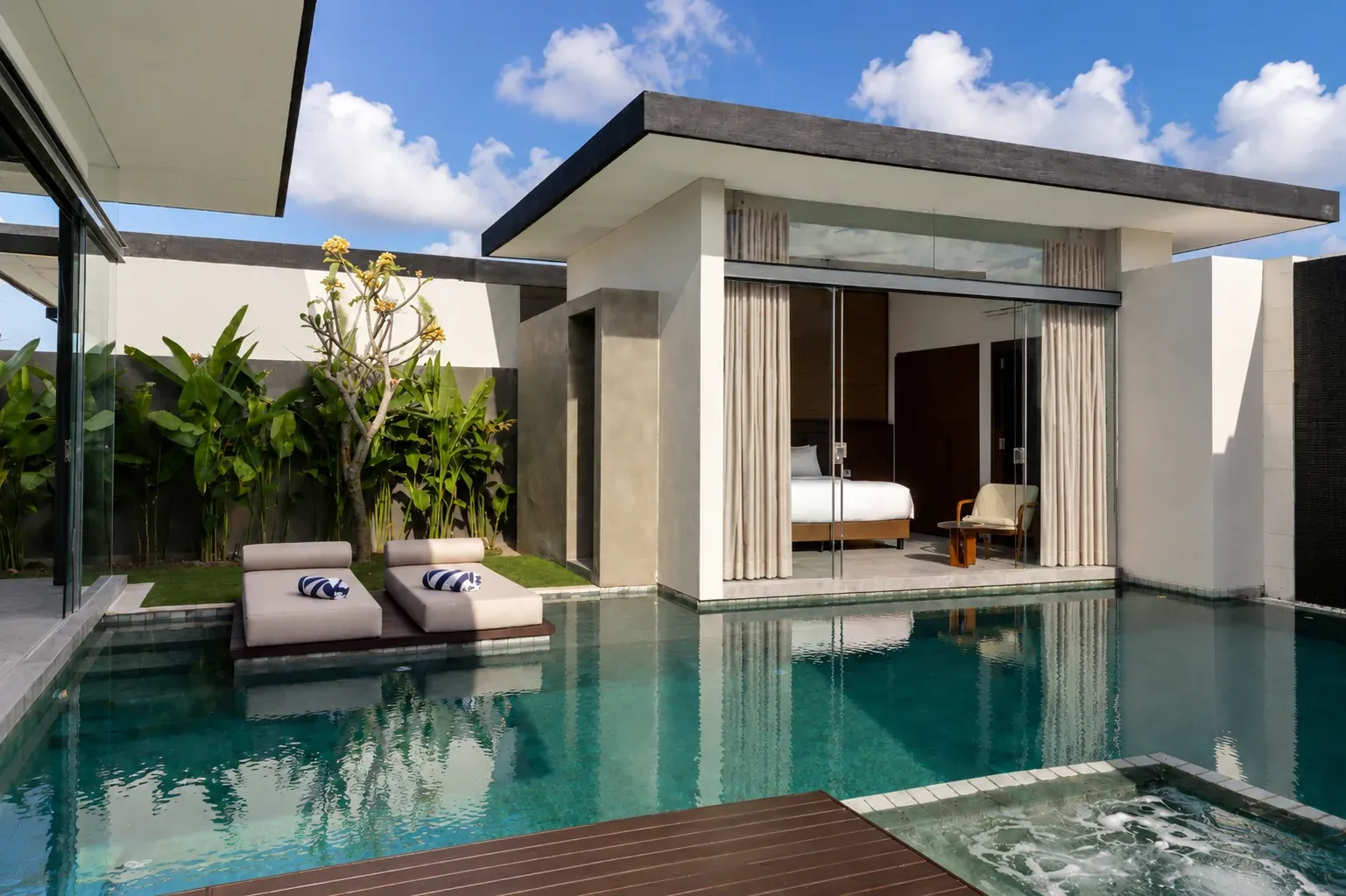
Pronoia offers one- and two-bedroom operating villa formats, each with a private pool. Choose between them based on the people and dog actually travelling, not simply on the largest available footprint. The private-pool villa safety checklist explains how to inspect water edges, shade, doors and arrival setup in more detail.
Treat the private pool as a safety feature to manage
A pool creates cooling and recreation for people, but it is not automatically safe for a dog. Swimming ability varies, and even a confident swimmer can struggle to locate steps, climb out, or cope with an unfamiliar edge after dark. Pool chemicals and repeated drinking from the pool are additional reasons to provide normal fresh water and supervision.
On arrival, walk the pool perimeter before letting the dog explore freely. Identify the shallowest exit or steps, test whether the surface is slippery, and remove toys that could draw the dog toward the water unsupervised. Keep doors controlled until you know how your dog responds to reflections, splashing and the new layout.
The American Veterinary Medical Association’s warm-weather guidance advises constant supervision around pools because not all dogs are strong swimmers. It also warns against assuming that a dog can simply find the way out. That general veterinary guidance does not replace advice from your own veterinarian, particularly for brachycephalic dogs, puppies, senior dogs or animals with medical conditions.
Luxury should reduce avoidable friction. Bring a familiar towel, position fresh water away from the pool, and agree who is supervising before doors open. Those simple controls are more useful than relying on a property label.
Plan for Bali heat, surfaces and daily timing
Bali’s climate changes the rhythm of a dog-friendly stay. Heat and humidity can make a midday route unsuitable even when the distance looks short. Stone, concrete and sand may become hot enough to be uncomfortable, while a shaded garden can still feel humid with limited airflow.
Schedule outdoor activity for cooler periods, test surfaces with your own hand before a longer walk, carry water, and give the dog access to shade and a calm indoor recovery space. Never leave a dog in a parked vehicle. The AVMA source above lists excessive panting, difficulty breathing, weakness and collapse among warning signs that require immediate cooling and veterinary attention.
Arrival day deserves a lighter plan than a normal day. Flights, road travel, a new room and unfamiliar sounds accumulate stress. Let the dog learn one controlled zone first, place water and bedding before opening the rest of the villa, and avoid scheduling a long excursion immediately after check-in.
Your packing list should account for the conditions rather than assume supplies are provided: usual food, medication, lead and backup lead, waste bags, portable water container, identification, vaccination and health records, familiar bedding, towel and any veterinarian-approved sun or paw protection. Ask the villa which items it provides, but pack essentials until that answer is explicit.
Check local movement and animal-health rules separately
A villa accepting a dog does not determine whether the dog can legally or practically travel to Bali. Transport, entry, inter-island movement, airline requirements and animal-health controls are separate questions, and they may change. Confirm them with the relevant government authority, airline and a qualified veterinary professional before making non-refundable arrangements.
Do not rely on a travel blog to settle import or quarantine eligibility. The booking team can confirm the property stay; it should not be treated as the authority for border or animal-health rules. Likewise, do not assume that a nearby beach, restaurant or resort facility accepts dogs because the villa does. Check each place directly and respect current signage and staff instructions.
Responsible travel also means avoiding contact with free-roaming animals, not feeding wildlife, keeping vaccinations current and knowing how to reach veterinary care. Bali Animal Welfare Association’s responsible-tourism guidance explains why visitors should avoid handling animals impulsively and should report welfare concerns through appropriate local channels.
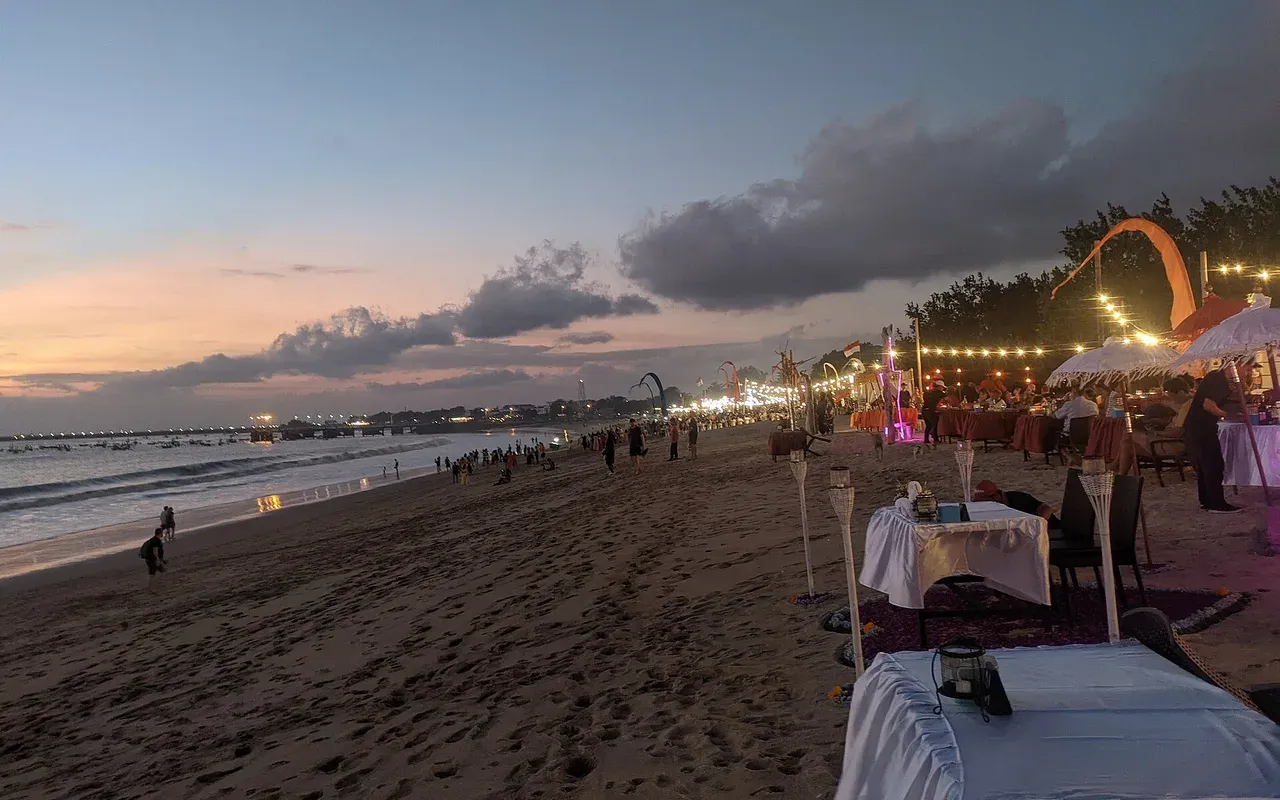
For location-specific planning, read the Jimbaran guide for travellers with a dog. It separates the villa’s confirmed dog-friendly status from transport, public-space access, heat and local animal-safety decisions.
Get the complete stay terms in writing
The most useful booking record is a short written confirmation that joins the essential facts in one place. It should identify the villa, check-in and check-out dates, guest count, the fact that a dog is travelling, the price, payment timing, cancellation terms, and any dog-specific conditions that apply.
Review the response for gaps rather than only for a positive answer. If a cleaning charge, refundable deposit, restricted zone or supervision rule applies, it should be visible before payment. If none applies, ask the team to state that rather than relying on silence. The goal is not to negotiate every possible event; it is to prevent a basic mismatch at arrival.
Pronoia’s booking flow makes the declaration explicit. Select the villa and live dates, enter the number of guests, tick “I’m travelling with a dog,” and send the request. The online quote applies the dog-stay surcharge and minimum stay before the request is sent. The team then confirms the price, dog conditions and stay terms in writing, usually within the stated response window. Dates are held only after confirmation.
Keep that written answer accessible during travel. If the travelling dog, dates or villa changes, request an updated confirmation because the original reply may no longer describe the booking.
Use a final booking checklist
Before committing to a luxury dog-friendly villa in Bali, verify the following:
- The exact villa accepts your dog for the selected dates.
- The booking identifies the dog, rather than relying on a directory filter.
- Any size, number, cleaning, deposit or damage terms are written down.
- Private and shared-area access is clear.
- The layout, gates, pool edge and service access fit your supervision plan.
- You have a heat-aware routine and essential supplies.
- Transport and animal-health permissions are checked with the proper authorities.
- Veterinary contact details and an emergency transport option are saved.
- The total price, payment and cancellation terms are confirmed together.
A genuinely dog-friendly stay is not defined by decorative amenities or a paw icon alone. It is defined by a property that says dogs are accepted, a guest who declares the dog, and a team that confirms the practical terms before arrival.
To request an operating private-pool villa in Jimbaran, use Pronoia’s live dates and dog-friendly booking form. Select the villa and dates, mark that you are travelling with a dog, and wait for the written confirmation before treating the stay as booked.
Sources
- Warm weather pet safety American Veterinary Medical Association · Accessed September 9, 2026
- Responsible tourism Bali Animal Welfare Association · Accessed September 9, 2026
- Pronoia villa rental Pronoia · Accessed September 9, 2026
General information only. Property, legal and tax decisions require independent Indonesian professional advice.